
The Silent Sleep Thief You Carry Everywhere
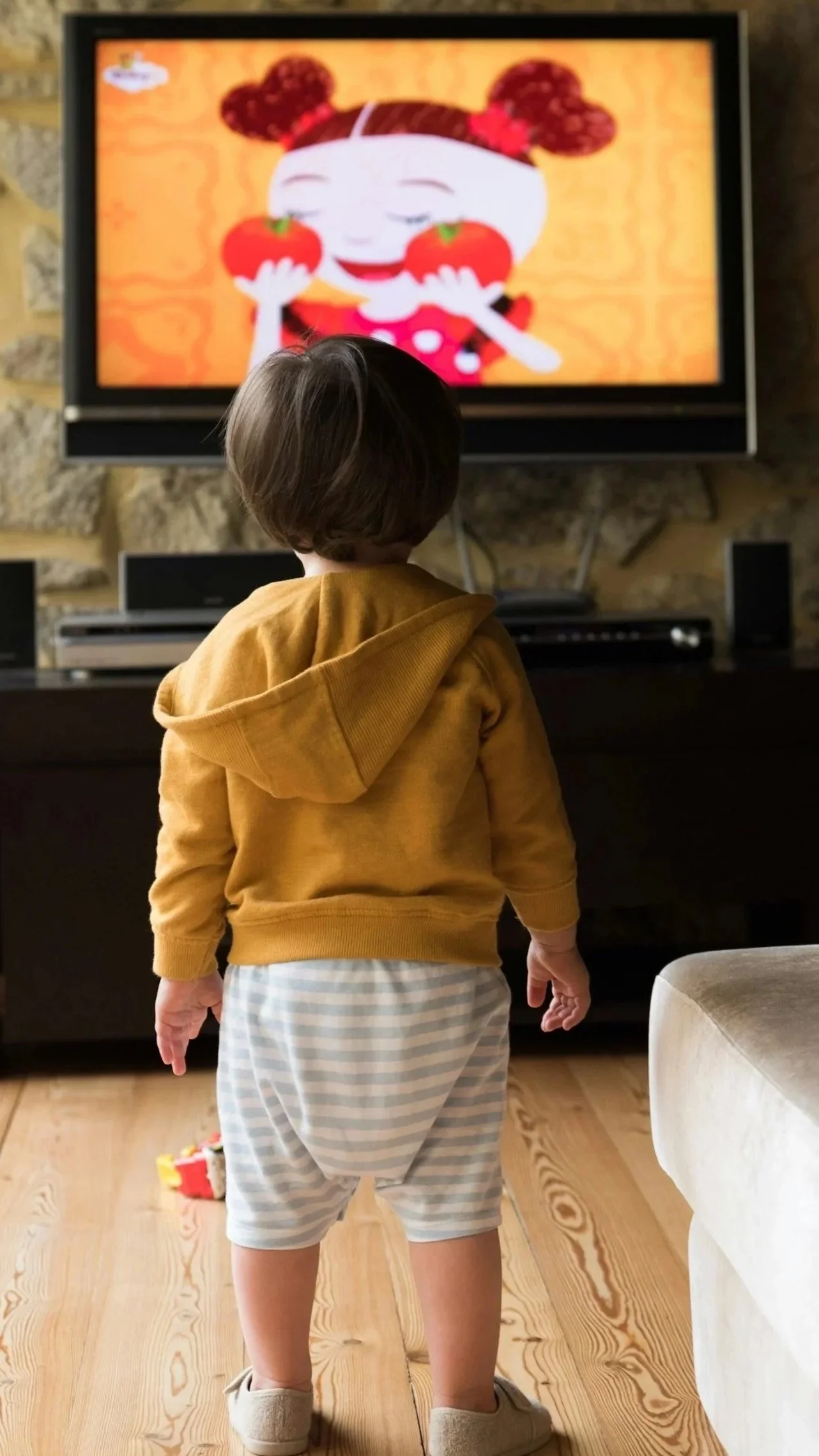
If you're reading this at 2am with a baby on your chest and the TV quietly glowing in the background, no judgement here. Screens are part of life, especially in those blurry early months of parenthood. But if your little one is fighting sleep, waking frequently, or struggling to settle, screens might be playing a bigger role than you'd expect.
Here's what the research says, and what you can actually do about it.
Why Screens Disrupt Your Baby or Toddler's Sleep
Little ones are exquisitely sensitive to light far more than adults. The blue light that devices emit tells the brain "it's daytime," which suppresses melatonin, the hormone that helps your child drift off. Even background TV in the room can have an effect.
It's not just the light, either. Fast-moving images and stimulating sounds keep little nervous systems switched on at exactly the time you need them switching off. That means more tears at bedtime, more night waking, and more exhaustion for everyone.
What the Experts Currently Recommend by Age
Here in Aotearoa, Cyber Safety New Zealand recommends the following age-based guidelines to help parents manage their children's screen time effectively, drawing on guidance from the New Zealand Ministry of Health:
Under 2 years: Screen time is not recommended, except for video chatting.
Ages 2–5: Limit screen time to one hour per day of high-quality educational programming.
Ages 6 and older: Set consistent limits to ensure screen time doesn't interfere with sleep, physical activity, and other healthy behaviours.
It's also worth keeping in mind that it's not just the quantity of screen time that matters, but the quality of the content, and engaging children in discussions about their screen time choices can promote critical thinking and help them make informed decisions. For the youngest tamariki especially, if screens are on, being right there with them makes a real difference.
Practical Tips for Sleep Deprived Parents
These aren't about being perfect, they're about small shifts that can make bedtime easier.
Switch off screens an hour before bed. Even 30–60 minutes of screen-free wind-down time can help melatonin kick in naturally. Yes, that might feel impossible some nights, and that's okay.
Use night mode on your own devices. Most phones and tablets have a blue light filter you can schedule to activate automatically in the evening. This helps you and your baby if they happen to be nearby.
Create a simple, calming bedtime routine. A warm bath, a feed, a story, a waiata. A predictable sequence signals to your little one's brain that sleep is coming. It doesn't need to be elaborate to work.
Keep screens out of the bedroom entirely. Even a standby light or the flicker of a monitor can be enough to disrupt a light-sleeping baby.
Keep background TV off. Having the television or other devices on in the background is discouraged, as background media can distract babies and negatively affect their development and their sleep. Music is a great alternative.
Don't stress the odd imperfect night. One late movie on the couch isn't going to derail everything. Consistency over weeks and months is what matters, not perfection every single evening.
A Note for You, the Parent
Children often mirror the behaviours they observe in their parents, so managing your own screen time matters too and scrolling on your phone in a dark room before bed is affecting your sleep as well. You deserve rest just as much as they do.
The early days and years are hard. Screens are a tool, and like all tools, it's about how and when you use them. A few small changes around bedtime can make a surprisingly big difference to how everyone in your whānau sleeps.
Want more support building a calming bedtime routine? Explore my wind-down rituals blog, or download my free Bedtime Routine Guide to get started tonight.
I’ve got you,
Clare
Your baby sleep expert