
You’re Running on Fumes! Here's What You Actually Need to Know About Safe Sleep.
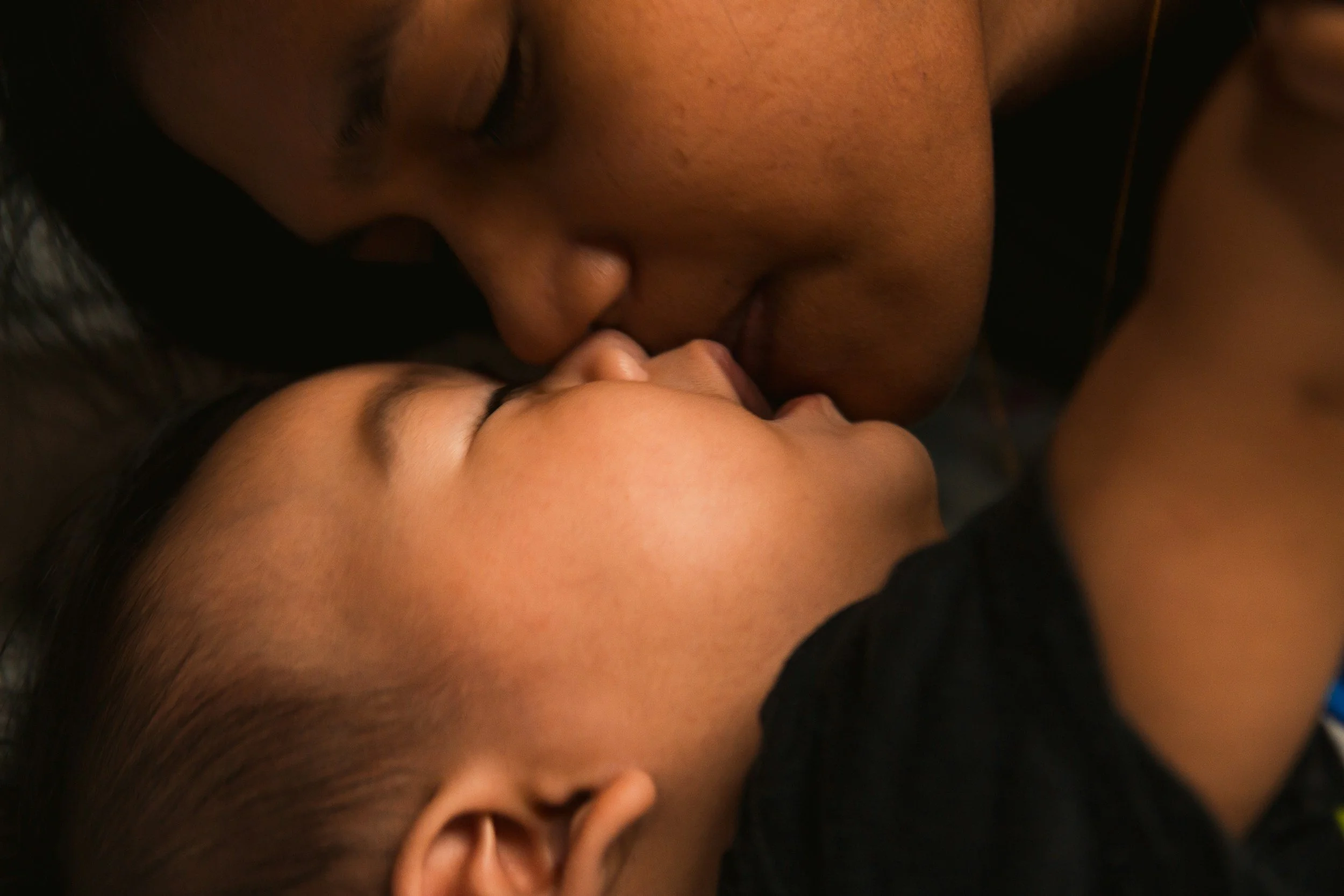
You're reading this at some ungodly hour, baby finally asleep, eyes barely open. Or maybe you're googling on your phone while feeding at 3am, trying to figure out if what you're doing is okay.
I see you. And I want you to know there is no judgement here!
Whether your baby sleeps in a cot or in your arms, whether you're doing everything "by the book" or making it up as you go, my number one priority is always the same: keeping your baby safe. Whatever that looks like for your family.
So let's ditch the jargon and talk about safe sleep in plain, tired-parent English.
The ABCs: The Simplest Way to Remember the Basics
When it comes to where your baby sleeps, think A, B, C:
A - Alone: No pillows, no stuffed animals, no loose blankets tucked in around them. Just your baby, in their own space. It feels bare, but bare is safe.
B - Back: Always pop them down on their back. Every single time. It's the single biggest thing you can do to reduce the risk of SIDS (Sudden Infant Death Syndrome). Once they can roll both ways on their own, you can relax a little. But until then, back is best.
C - Cot (or bassinet/wahakura/Pēpi-Pod®) A firm, flat surface with a fitted sheet. That's it. No mattress toppers, no memory foam, no soft inserts. If it feels firm to you, it's right for them.
Setting Up Their Sleep Space
(The Real Talk Version)
You don't need the most expensive cot or the fanciest baby monitor. You just need a space that ticks these boxes:
Firm mattress, snug fit. If you can squeeze more than two fingers between the mattress and the cot frame, it's too small or the wrong size.
A bare cot is a safe cot. The beautiful quilts, the bumper pads, the matching pillow? Keep them for the baby photoshoot, not for sleep. Soft objects around a baby who can't yet move their head is a risk not worth taking.
Same room, different bed. For at least the first six months, having your baby sleep in your room, but in their own space, can reduce the risk of SIDS by up to 50%. This is the sweet spot: close enough to hear them, safe enough to relax.
Get the temperature right. Aim for 18–20°C in the room. If you're comfortable in a light layer, they probably are too. A sleep sack or swaddle instead of loose blankets is the way to go, no tucking required, no blanket-over-the-face worries.
Dummies and Breastfeeding
Yes, Both Can Help
Here's something most parents don't realise: offering a dummy at sleep times is actually linked to a reduced risk of SIDS. You don't have to force it, if they're not interested, move on. And if it falls out once they're asleep? Leave it. No need to sneak back in and replace it.
As for feeding, breastfeeding is associated with a lower SIDS risk too. But here's my take: fed is best. A happy, well-fed baby, whether that's breast milk or formula, is what matters. Don't let anyone tell you otherwise.
Smoke: This One's Non-Negotiable
Exposure to cigarette smoke (before birth and after) is one of the biggest known risk factors for SIDS. If anyone smokes, it needs to happen well away from your baby and never in the home or car. Even residual smoke on clothing matters.
This isn't about judgement, it's just one of those areas where the evidence is really clear.
If You're Bedsharing
The Safe 7
I want to talk about this honestly, because I know bedsharing happens. Sometimes it's a deliberate choice, sometimes it's what gets you through the night, and sometimes it's 4am and you're just surviving.
I work with a lot of families to help babies transition to the cot but I completely respect that bedsharing is the right fit for some families. If that's you, I'm not here to lecture you. I'm here to make sure you're doing it as safely as possible.
The Safe 7 (developed by La Leche League) are the conditions that research shows make bedsharing significantly safer:
Sober: neither parent has consumed alcohol, sedating medications, or drugs
Non-smoker: neither parent smokes (even if you don't smoke in bed)
Safe surface: on a firm mattress, not a sofa, armchair, waterbed, or couch
Sharing with parents only: not with other children or pets in the bed
Breastfeeding: breastfeeding mothers naturally position themselves in a protective curl around their baby
Healthy, full-term baby: premature babies or those with health conditions have higher risk
Baby on their back: still on their back, not wedged against a pillow or adult
If any of these don't apply, the risk increases significantly. If you're not sure whether bedsharing is safe for your family, please reach out. I'm happy to talk it through with you without any pressure or judgement.
A note on NZ guidelines: The Safe 7 is a useful framework, but it's important to know that New Zealand's official position set by the Ministry of Health and the SUDI National Prevention Programme is that the safest place for your baby to sleep is in their own flat, firm bed (such as a wahakura, Pēpi-Pod®, bassinet, or cot), in the same room as you. Bed-sharing is identified as one of the key modifiable risk factors for SUDI in Aotearoa, particularly for pēpi who are premature, have health conditions, or whose whānau smoke. For the most up-to-date official guidance, visit sudinationalcoordination.co.nz or Healthify's SUDI page. Pēpi-Pods® and wahakura are also available at no cost for eligible whānau, talk to your midwife or contact the SUDI National Coordination team at hauora@hapai.co.nz.
You're Doing Better Than You Think
Parenting is relentlessly hard, especially when you're running on no sleep. But here's the thing, you're reading this. You're looking this up. You care deeply about keeping your baby safe, and that matters more than you know.
The guidelines above aren't there to add to your mental load. They're there so that when your head finally hits the pillow, you can rest a little easier knowing your baby is sleeping safely.
And if you're ready for your whole family to get more sleep? That's where I come in.
Struggling to make sense of safe sleep, or ready to help your baby sleep longer stretches in their own space? Book a free consultation and let's figure out what works for your family.
With support and no judgement,
I’ve got you
Clare
Your baby sleep expert